Boiler Safety: How Safe Is My Boiler? Warning Signs and What to Do
Boiler safety is strong when a boiler is correctly installed and serviced every year by a Gas Safe registered engineer. Modern boilers also have built-in safety devices that shut them down if a fault develops, so serious incidents are rare. The real danger is a fault that goes unnoticed.
So how do you spot a fault before it becomes a problem? The best place to start is knowing what to look for. From November to January, the heating runs for hours every day, which makes small faults easy to overlook. Some warning signs mean you should stop using the boiler straight away, while others can safely wait for a booked visit. This guide ranks them by urgency, explains the main risks from carbon monoxide to leaks, and shows what happens if an engineer declares your boiler unsafe.
Is My Boiler Safe?
Yes, if it is in good condition and showing no warning signs. Age alone doesn’t make a boiler unsafe, and a well-kept older boiler can be safer than a neglected newer one. What matters is its condition, its service history, and whether any of the warning signs below are present.
Age is still worth knowing. If you’re unsure how old your boiler is, or how long a boiler lasts before it needs replacing, an engineer will ask the same questions when they test its safety devices.
Any boiler can develop faults between service dates though. Boiler insurance covers the yearly boiler service and breakdowns together, so a small fault gets fixed early instead of turning into a major issue. The warning signs below show what to look for in the meantime.

Boiler Cover That Includes Your Annual Service
Stay covered all year. Our boiler cover includes an annual boiler service, with parts and labour included. Terms and conditions apply.
Smell Gas or CO Alarm Sounding? Do This Now
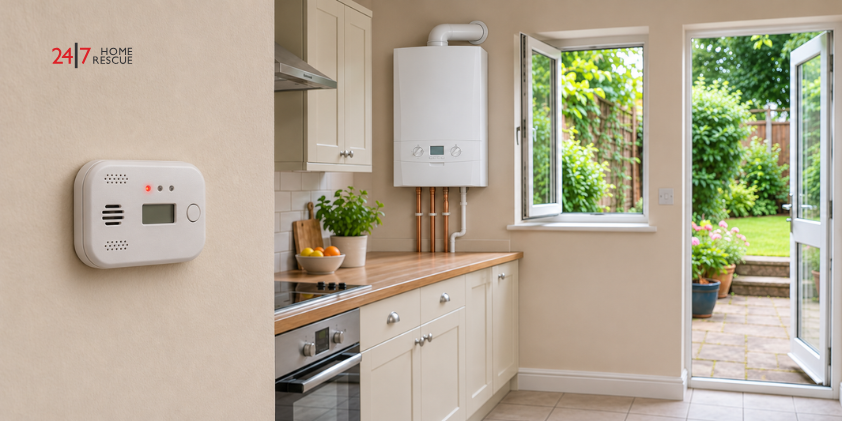
Switch off gas at the meter; open doors and windows also stay away from flames and switches. Evacuate to the outdoors and contact the National Gas Emergency Service (NGES) 0800 111 999. A gas smell from your boiler gets the same response as any time you smell gas.
What Are the Warning Signs of an Unsafe Boiler?
The main warning signs of an unsafe boiler are a gas smell, a sounding CO alarm, a yellow or orange flame, and soot or scorch marks. Any of these means stop using the boiler. Leaks, noises, and pressure changes matter too, but they are less urgent.
The signs below run from most to least urgent.
- Smell of gas near the boiler: If the smell of gas is noticed near the boiler, immediately turn off the boiler and follow the emergency steps above.
- Carbon monoxide alarm sounding: Carbon monoxide may be present in your home, do not turn on the boiler, and consider it an emergency.
- Headaches, dizziness or nausea at home: These may be early signs of carbon monoxide, turn off the boiler, and get medical help.
- Yellow or orange flame: It is an indication that gas is burning poorly and could produce CO. Do not use the boiler until it has been checked.
- Soot, scorch or black marks: Fumes may be escaping, so leave the boiler off until a Gas Safe engineer has seen it.
- Water leaking from the boiler: A part may have failed, and water may reach electrics, so switch it off and get it checked very urgently.
- Overheating or hot casing: An overheating boiler may mean the overheat protection has malfunctioned, so switch it off, allow it to cool and have an engineer check.
- Pressure above 3 bar: The safety valve may be about to open, so switch the boiler off and have it checked without delay.
- Pilot light keeps blowing out: The flame safety control might have failed, turn it off and have it repaired as soon as possible.
- Loud banging, whistling or kettling: A boiler making a lot of noise is rarely dangerous, so book a check if it carries on.
- Boiler keeps turning itself off: This is normally a safe shutdown, and you should call an engineer to find out what is causing it.
- Pressure below 1 bar: A boiler losing pressure isn’t a safety risk, but get it checked if it keeps happening.
- Radiators cold at the top: Cold radiators are a heating problem, not a safety risk, so it can wait for a booked visit.
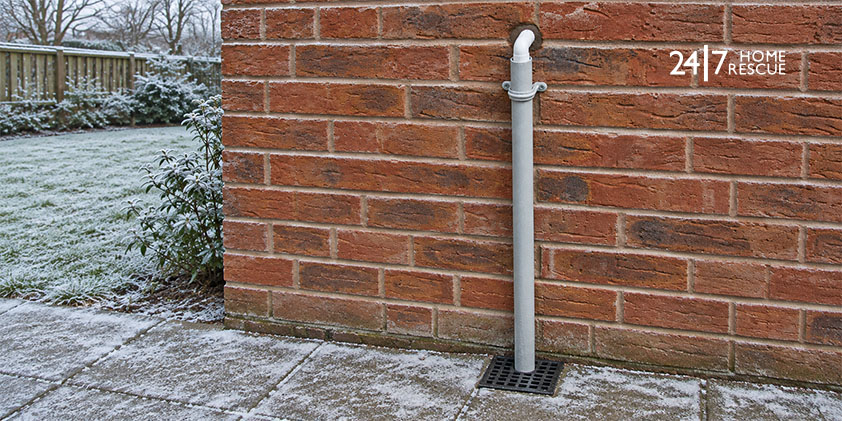
- Frozen condensate pipe: The boiler shuts down safely in the cold, so mention it at your next service.
- Fault code on the display: The boiler has spotted a fault, so note the code and arrange a check.
Can a Boiler Explode?
Boiler explosions are very rare in modern UK homes. Safety devices shut the boiler down or release pressure before it becomes dangerous. The real risk is a gas leak, which is why a gas smell or a CO alarm matters more than any pressure reading.
So, can boilers explode at all? Only if several safety devices fail at once. A flame supervision device cuts the gas if the flame goes out, and an overheat thermostat stops the burner. That is why high boiler pressure usually trips a valve rather than causing a blast.
What Does a Boiler Safety Valve Do?
A boiler safety valve, also called the pressure relief valve, opens when pressure climbs too high, usually at around 3 bars. It sends excess water outside through a pipe, so pressure can’t build up inside the system. Never block or cap that pipe.
Can a Boiler Leak Carbon Monoxide?
Yes. A faulty, badly installed or poorly maintained boiler can leak carbon monoxide, a colourless, odourless gas. It forms when gas burns without enough air, for example when a flue is blocked. A boiler leaking carbon monoxide is rare but serious.
The NHS lists the symptoms, which are easy to mistake with flue. Because you can’t see, smell or taste the gas, a properly fitted carbon monoxide detector is the only dependable warning.
Can a Boiler Leak Carbon Monoxide When Switched Off?
Not normally. A boiler that is turned off will not produce carbon monoxide. If the alarm is sounding and but the boiler is off, the source could be another appliance or a neighbour’s flue, so leave the house and call the gas emergency line.
Is a Leaking Boiler Dangerous?
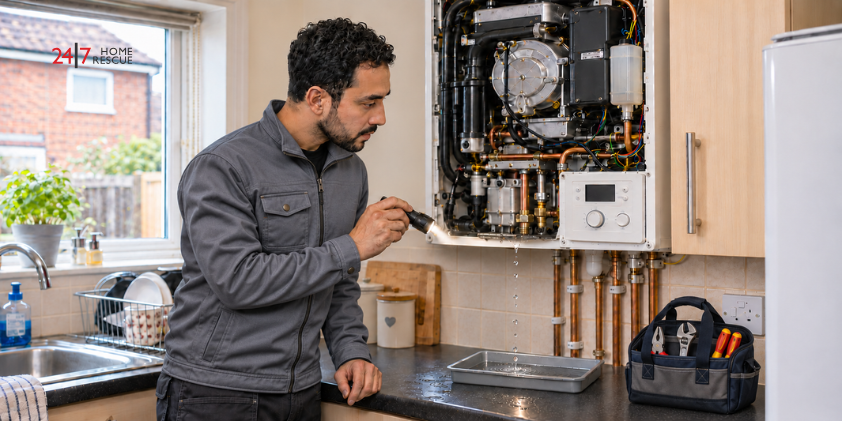
If your boiler leaks, water near the electrics can cause short circuits and damage to your home. A leak is also a sign that a part has failed, so it is essential for an engineer to find the cause before carrying out the repair.
Is a Leaking Boiler an Emergency?
It is urgent, but not usually a gas emergency. Turn off the boiler if water is pooling or touching electrics. A slow drip is not critical, but it still needs to be monitored.
Are Fumes from a Boiler Flue Dangerous?
Yes, if they get indoors in your house. Carbon monoxide is a component of flue gas and should be discharged through the flue. Any fault in the flu is an urgent problem as it can allow them to re-enter the house.
Room-sealed boilers draw air from outside, so fumes are less likely to enter the room. Open-flued boilers take air from the room itself, and research on open-flued boilers and CO risk links them to more poisonings. Flue position is set by boiler flue regulations, and the HSE publishes domestic gas guidance.
Is a Leaking Boiler Flue Dangerous?
Yes. A leaking flue can release combustion fumes, including carbon monoxide, into the home. Stop using the boiler and get it checked straight away, because you can’t judge a flue by looking at it.
What Is a Condemned Boiler and What Happens Next?
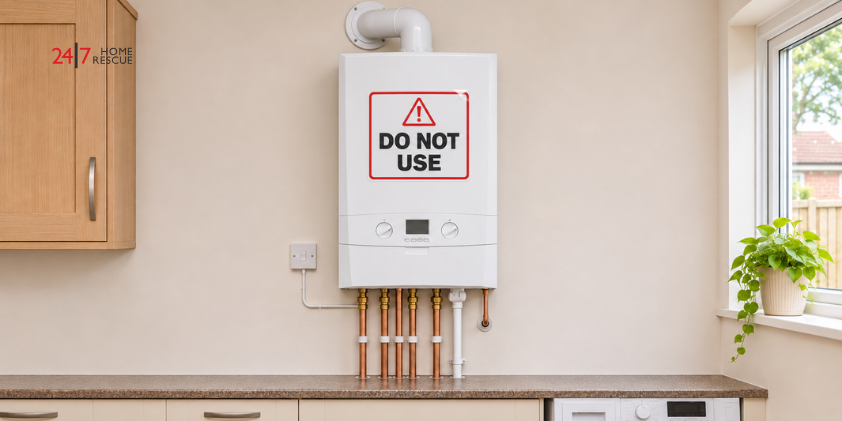
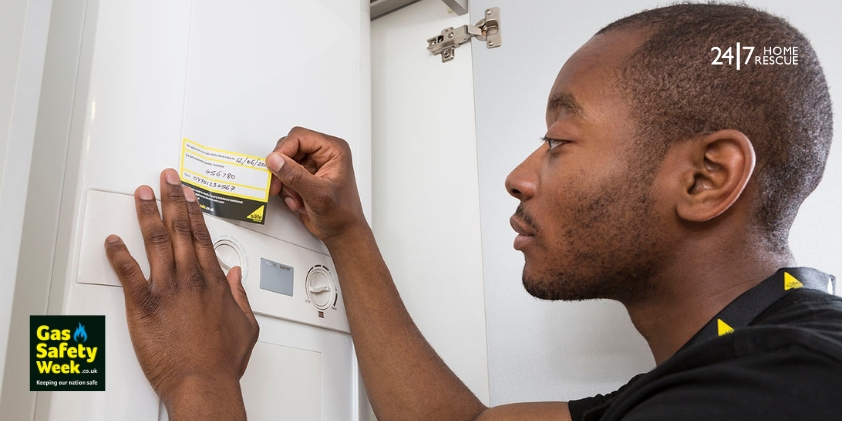
A condemned boiler is one a Gas Safe engineer has declared unsafe to use and disconnected, usually with a warning label. It stays off until it is repaired or replaced. Engineers classify unsafe appliances under the Gas Industry Unsafe Situations Procedure.
Immediately Dangerous means the danger is present now, so the engineer must disconnect the boiler. At Risk means it isn’t dangerous yet but could become so, so the engineer recommends switching it off. Only a Gas Safe registered engineer can legally carry out the boiler repair, and the Gas Safe Register is simply a public list where you can check an engineer’s ID card.

Boiler Not Working Safely? Book a Boiler Repair
Don’t wait for a small fault to grow. A Gas Safe registered engineer can inspect your boiler, find the cause, and carry out the repair.
How Do I Keep My Boiler Safe?
Book an annual boiler service with a Gas Safe registered engineer, test your CO alarm monthly, and keep flue terminals and vents clear. These three habits catch most faults early and keep a boiler safe through the heating season.
A boiler service checks combustion, the flue and the safety devices, so it helps to know what a boiler service includes first. Most warranties also set how often a boiler should be serviced. A service and a gas safety check are different jobs, so the gas safety check vs boiler service difference matters.
Landlords must hold a landlord gas safety certificate (CP12), the yearly gas safety record. Before the first cold snap, get your boiler ready for winter with that service.
CP12 Made Simple for Landlords
Book a Gas Safe registered engineer for your annual gas safety check and get your CP12 certificate.
Keep Your Boiler Safe This Winter with 24|7 Home Rescue
Boiler safety comes down to acting quickly on the warning signs and keeping up an annual service. 24|7 Home Rescue’s Gas Safe registered engineers carry out annual boiler services across every UK postcode, and you can book through our website.
Want repairs covered too? With boiler cover from 24|7 Home Rescue, your annual service comes as part of the policy.

Book Your Annual Boiler Service
A yearly service by a Gas Safe registered engineer checks your boiler’s combustion, flue and safety devices, helping to keep it running safely through winter.
Is it safe to leave my boiler on overnight or while I’m away?
Yes, if it is serviced and working normally. Modern boilers are built to run for long periods, and their safety devices shut them down when they detect certain faults. A low frost setting protects the pipes while you’re away, and a CO alarm covers what those devices can’t. If a warning sign appears, switch it off.
Does a new boiler need a gas safety check?
Yes. A Gas Safe engineer must commission a new boiler, which works as its first safety check. Book the first service within 12 months to keep most warranties valid, and keep the commissioning paperwork, as engineers and warranty providers ask to see it.
Is it safe to work on your own boiler?
No. Any work on a boiler’s gas supply, flue or burner must be done by a Gas Safe registered engineer. Trying to do it by yourself may lead to fumes, fire and can void home insurance. You can test the CO alarm, and maintain clear vents.
At 24|7 Home Rescue, we aim to keep our blogs accurate and helpful at the time of publication. However, details such as images, services, prices, offers, discounts, or related information may change over time. Content is provided for general information only and should not be taken as professional advice. For appliance- or boiler-specific guidance, always refer to your manufacturer’s user manual, as controls, settings and features may vary by brand and model. For the latest updates on our services, prices, and any available offers or discounts, please review our Terms & Conditions or contact us directly. 24|7 Home Rescue accepts no liability for any actions taken based on outdated or incomplete content. Our team is always happy to help with any questions.
Recent Posts
Popular Posts

24 Mar, 2015

13 Apr, 2015
Related Posts