How Long Does a Boiler Last?
When the boilers are installed professionally, and then annually serviced by a Gas Safe registered engineer, it will typically last 10 to 15 years in a reasonable quality home. Omitting maintenance may result in a boiler failure within 6-8 years. However, it can last for estimate 20 years and beyond if properly maintained. The ideal thing you can do to make your boiler last is have it serviced on an annual basis.
How Long Do Boilers Last on Average?
The life span of boilers in most of the major manufacturers in the UK is approximately 10 to 15 years if maintained properly. Annual servicing ensures it is in good condition, catches issues early, and ensures your warranty remains valid. Without maintenance for a few years, you may find your boiler condition at the bottom of the ideal spectrum or lower.
The Energy Saving Trust claims that replacing an old and inefficient gas boiler with a new A-rated model boiler, installing new controls and thermostatic radiator valves, can save you up to £315, per year on energy bills.
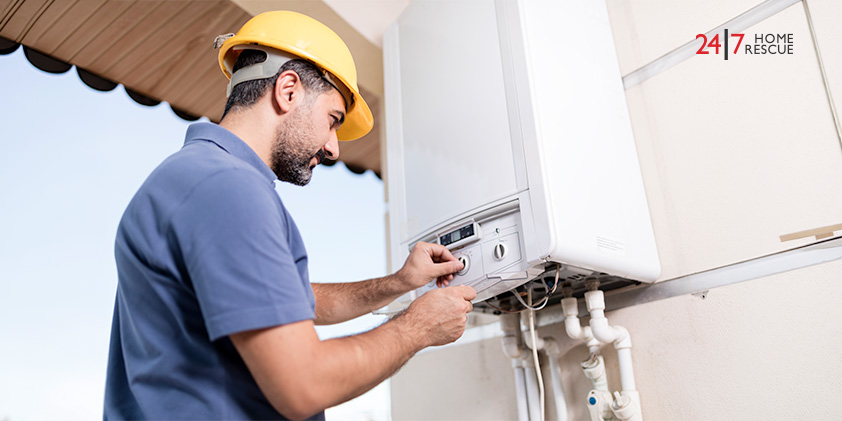
One of the efficient ways to prolong your boilers’ life is to have it serviced annually. 24|7 Home Rescue provides servicing carried out by Gas Safe registered engineers.

Boiler Service
Ensure your boiler runs efficiently and safely with our professional boiler servicing. Regular maintenance will save you money in the long run and potentially prevent breakdowns.
Combi Boilers Lifespan
The most prevalent type of boiler used in UK houses is the combi boiler. They come with both central heating and hot water, and do not require a separate hot water cylinder.
A combi boiler is used more consistently than the other heating systems, as it provides hot water all year round not only during colder months. That’s why many homeowners prefer boiler service in the summer, so their heating systems are ready for the winter season when they are in even greater demand.
Gas Boiler Technology and Longevity
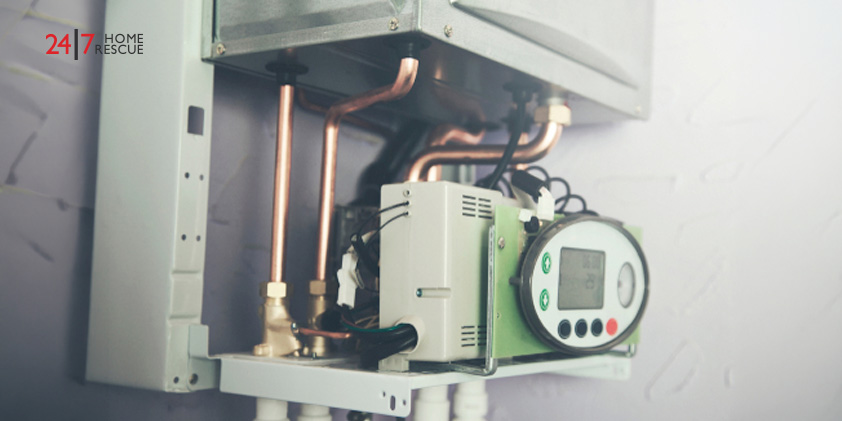
Since 2005, condensing gas boilers has been the standard choice in most UK households, because of their greater efficiency. Older non-condensing boilers may have been able to work for 20-25 years but require a lot more energy and cost a lot more to operate.
The efficiency of modern condensing boilers is increased by their advanced components and electronic controls. These features will contribute to energy savings but may also complicate repairs as the boiler ages.
What Factors Affect Boiler Lifespan?
The lifespan of a boiler is dependent on these five factors:
1. Annual servicing
This is non-negotiable. Every internal component is inspected by a Gas Safe registered engineer, combustion and flue integrity is tested, leak and blockage checks are performed, and blockage is cleaned before it causes damage.
2. Water quality
London, South East and East Anglia are areas that are prone to hard water, which leads to limescale accumulating on the inside of the heat exchanger. One of the biggest reasons for a boiler going out of action is the effects of limescale. Installing a scale reducer on the mains supply and having your engineer fit a magnetic system filter, can greatly reduce this risk.
3. Installation quality
If the boiler is not installed properly, it will not function efficiently from day one. Have it installed by a Gas Safe registered engineer and ensure to get the gas system that is according to the size of your home.
4. Brand and build quality
Premium brands with longer warranties have a higher quality component and better parts of availability that can easily extend the average lifespan of a boiler.
5. Usage patterns
If your house is spacious and poorly insulated, the boiler will have to do excessive amounts of work and will not last longer like it would last in a well-insulated flat. The better the insulation, the longer your boiler will last.
Signs Your Boiler Is Reaching the End of Its Life
Just age may not be enough to make the right decision. Look out for these warning signs. Each one of them should be taken seriously.
- Frequent breakdowns: If you are calling an engineer more than twice a year, then repair costs are probably getting close to the replacement value.
- Rising energy bills: This is typically a sign of reduced efficiency with an ageing boiler, unless the increased consumption is due to changing energy use.
- Strange noises: Banging, kettling, whistling, or constant gurgling noises indicates wear of internal components or limescale inside the pump.
- Slow or uneven heating: If radiators are taking a long time to heat up or if rooms are not heating up consistently, this indicates that there is a decrease in the output of the boiler.
- Water leaks: If water is leaking from the boiler, it means that the boiler has internal corrosion or damaged seals.
- Parts becoming unavailable: If your engineer tells you that replacement parts are no longer available, it clearly indicates the ageing of your boiler.
Safety warning: If you notice a yellow flame, smell gas or see black soot around your boiler, immediately turn off the heat and call the National Gas Emergency Service on 0800 111 999. These are potential signs of a carbon monoxide leak.
My Boiler Is 10, 12, 15 or 18 Years Old – Should I Replace It?
People are often curious about this question and ask engineers about it, but the actual answer is that the state of the boiler is more important than its age.
10 years old:
This is the average age. If the boiler has been serviced every year and does not encounter any issues, there should be no need to replace it at this time. If you did not receive a service last year, get one, and keep it up to date and your boiler will work absolutely fine.
12 years old:
It can last for more years if you have scheduled regular maintenance, and you have not undergone any major repairs. If it does break down frequently or has not been checked much in these years, it would be better to replace it.
15 years old:
By fifteen years old most boilers have reached their mature age. If yours still functions it is likely that it is not as efficient as it was originally. An engineer’s perspective is valuable to get a clear picture. The question that arises is not does it work? but more, that does it cost you more to maintain it then to replace.
18 years old:
Repair cost for an eighteen-year-old boiler will often not be cost-effective, spare parts are often hard to obtain, and the efficiency difference between your boiler and an A-rated modern boiler will probably cost you hundreds of pounds a year.
Should I Repair or Replace My Boiler?
The 50% rule is frequently used by heating engineers. If the cost of having a repair done on a boiler is more than half of the cost of buying a new one, it will probably be more economical to replace the boiler, particularly if the boiler is over 10 years old.
In the UK, boiler repair prices generally fall between £100 to £500 depending on the issue and the hourly cost of labor is typically between £60–£100. While a new boiler replacement with installation cost ranges from £1,500 and £6,000 depending on the type of boiler, brand, location and complexity of the installation.
You can repair your boiler under following circumstances:
- The boiler is under 10 years old
- The repair is a first or second occurrence
- If the repairing cost is 50% lower than the replacement cost
- Parts are readily available
- The boiler is still under manufacturer’s warranty
Consider replacing if:
- The boiler is 15 years or older
- You’ve had three or more breakdowns in a year
- Repair cost exceeds 50% of the cost of a replacement boiler
- Parts are discontinued or hard to source
- Energy bills are consistently and unexplainably rising
24|7 Home Rescue connects you with Gas Safe registered engineers for emergency boiler repairs, available around the clock. We aim to provide transparent pricing with no hidden call-out fees.

Boiler Repair
Book your boiler repair service online and save time and effort. Our certified engineer will provide you with hassle-free assistance.
How to Extend Your Boiler’s Lifespan
The steps below are proven to make a real difference. These are not just theories but practical actions that heating engineers have seen add years to a boiler’s life.
Book an annual service: Have a Gas Safe-registered engineer inspection every 12 months. This is the most important step. Everything else is secondary.
Fit a magnetic system filter: Fitting a magnetic filter helps capture iron oxide sludge and protect your heat exchanger from one of the most common causes of damage in UK heating systems.
Use a scale reducer in hard water areas: Limescale destroys heat exchangers. A scale reducer on the incoming mains is cheap insurance if you live in London, the South East, or the Midlands.
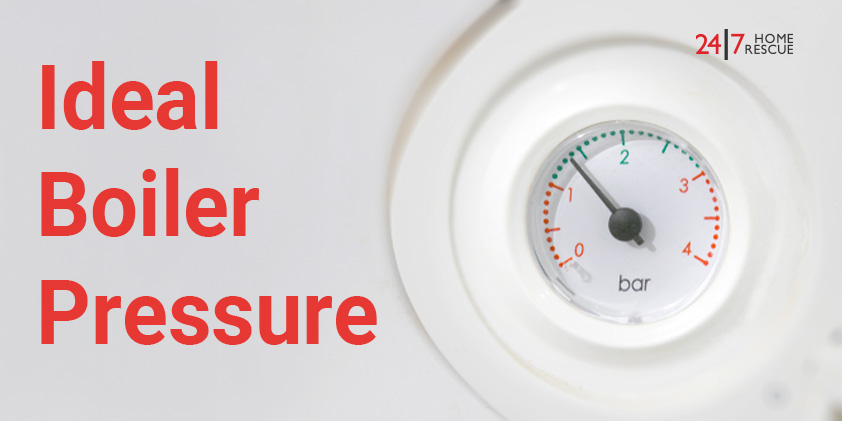
Check pressure monthly: Normal operating pressure is 1–1.5 bar when the heating is off. Regularly topping up pressure suggests a small leak that needs attention.
Bleed radiators before winter: Trapped air forces the boiler to work harder. Bleeding takes minutes and reduces unnecessary strain on the system.
Run the heating in summer: 10–15 minutes once a month stops the pump, diverter valve, and other moving parts from seizing up during long idle periods.
Lag the condensate pipe: A frozen condensate pipe is one of the most common causes of winter boiler lockouts. A few pounds of pipe insulation from any DIY store prevents it.
When things go wrong, 24|7 Home Rescue’s boiler cover keeps you covered, with parts, labor and engineer call-out covered, so you don’t have to pay an unexpected bill.

Boiler Insurance You Can Trust
Get boiler breakdown and landlord cover including free annual boiler service.
Choose your policy type
Frequently Asked Questions
How long do boilers typically last?
If you are servicing your gas boiler annually, you can expect it to last for 10 to 15 years. A boiler may last up to 20 years, depending upon the quality of the maintenance, but if the maintenance is not carried out properly, it can reduce the boiler’s lifespan.
What's the best age to replace a boiler?
Start to monitor the condition at age 12 and consider replacement at 15 years. Replacement is typically more cost effective than repair after 18 years or more.
My boiler keeps breaking down. Is it worth replacing it?
When it costs more than half of the cost of a new boiler to repair the current unit, it’s likely that it’s time to replace it. The importance of replacement increases if the boiler has been aged over 10 years or had three or more breakdowns within the past years.
What are the warning signs my boiler is failing?
Look out for frequent breakdowns, higher energy bills, strange noises like banging or kettling, slow or uneven heating, and any visible leaks. If you see a yellow or orange flame, this is a serious safety issue. Turn off your boiler right away and call the National Gas Emergency Service on 0800 111 999.
At 24|7 Home Rescue, we aim to keep our blogs accurate and helpful at the time of publication. However, details such as images, services, or related information may change over time. Content is provided for general information only and should not be taken as professional advice. For appliance- or boiler-specific guidance, always refer to your manufacturer’s user manual, as controls, settings and features may vary by brand and model. For the latest updates on our services, please review our Terms & Conditions or contact us directly. 24|7 Home Rescue accepts no liability for any actions taken based on outdated or incomplete content. Our team is always happy to help with any questions.
Recent Posts
Popular Posts

24 Mar, 2015


13 Apr, 2015