Landlord Gas Safety Certificate: The Complete UK Guide for Landlords
If you rent out a property in the UK, the law requires you to have a valid gas safety certificate in place at all times. Under the Gas Safety (Installation and Use) Regulations 1998, all gas appliances, fittings and flues in your rental property must be inspected every 12 months by a Gas Safe registered engineer, who will then issue a certificate confirming everything is safe commonly known as a CP12.
But the details matter. When does the certificate need renewing? What does the check actually involve? What are your tenants’ rights if something goes wrong?
This guide covers everything UK landlords need to know from the legal framework and inspection process to costs, renewal timelines, and penalties.
What is a landlord gas safety certificate?
A Gas Safety Certificate for landlords, (also called a Gas Safety Record), is the document that shows that your landlord’s gas appliances, pipework and connected flues have been inspected by a Gas Safe registered engineer and are safe to use by your tenants.
You, as a landlord must ensure that all gas appliances and installations provided as part of the tenancy are certified – such as the boiler, pipework, flues etc. If your tenant installs appliances of their own, they are not your responsibility to certify.
After the certificate is issued, your existing tenants have 28 days to receive a copy of the certificate after the inspection and any new tenant must receive a copy before they move in. You are required to keep each certificate on record for a minimum of two years.
Why do landlords legally need a gas safety certificate?

Regulation 36 of the Gas Safety (Installation and Use) Regulations 1998 sets out the legal duty that applies to any landlord renting out a residential property under a lease of less than seven years. Unlike many landlord obligations, this is not simply a civil matter between landlord and tenant, it is enforced by the Health and Safety Executive (HSE) as a matter of public safety, meaning non-compliance carries consequences that go beyond a contractual dispute.
The regulation is in place because poorly maintained gas appliances are one of the top causes of carbon monoxide poisoning in homes. Carbon monoxide is colourless and odourless – you can’t see or smell it. Tenants cannot assess the safety of appliances in a property they rent. That’s the entire responsibility of the landlord by law.
What does a landlord gas safety check involve?
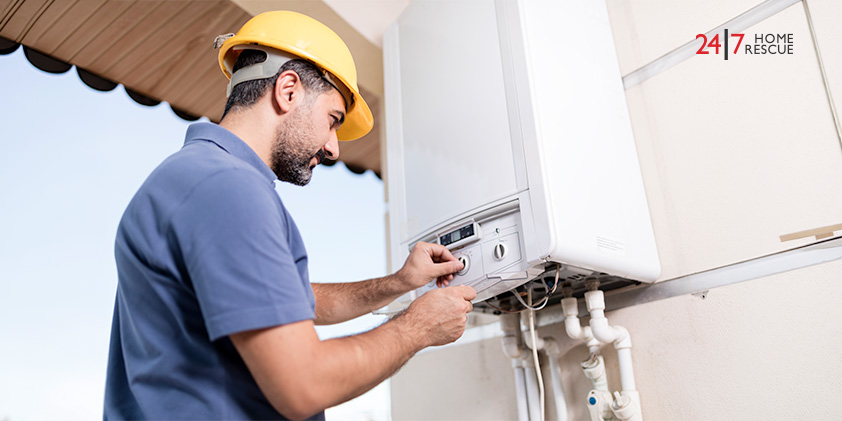
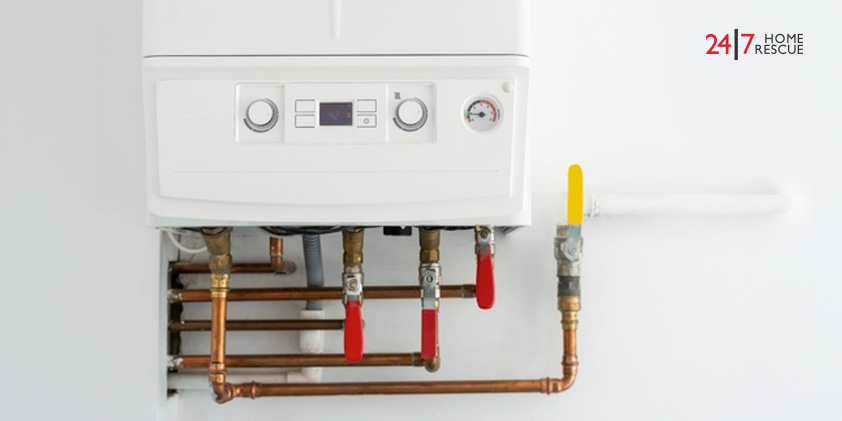
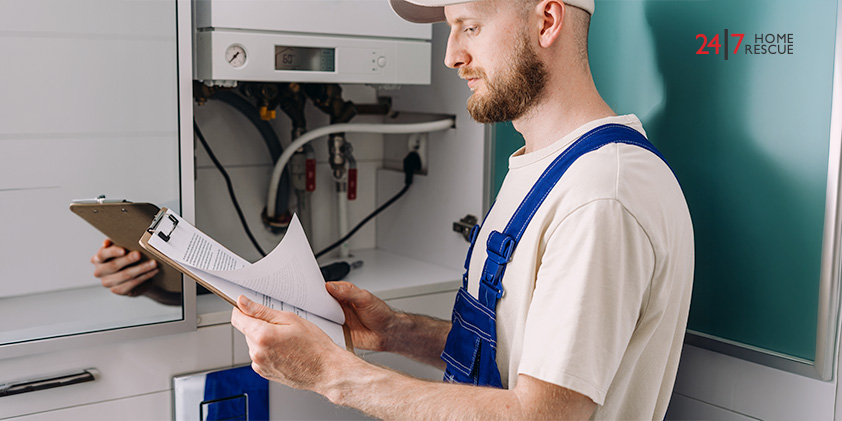
A landlord gas safety inspection (LGSI) is a systematic examination of every gas appliance, installation, and flue within the property that falls under your responsibility as a landlord. The engineer will carry out the following:
- Gas pressure and flow rate checks: confirming gas is being supplied and consumed at the correct levels
- Flue flow and integrity testing: verifying that combustion gases are safely expelled from the property
- Appliance operation checks: testing that each appliance ignites, operates, and shuts down correctly
- Ventilation assessment: ensuring adequate airflow exists for safe appliance operation
- Visual inspection of pipework and fittings: checking for signs of damage, corrosion, or unsafe installation
The time taken will vary depending on the number of appliances in the property
If the engineer identifies an unsafe appliance, they will declare it either ‘At Risk’ or ‘Immediately Dangerous’. An ‘Immediately Dangerous’ appliance will be taken out of service on the spot. In both cases, any remedial work required is the landlord’s responsibility and is separate from the cost of the inspection itself. This may include an boiler repair if the boiler is found to be unsafe during the inspection.
How much does a landlord gas safety certificate cost?
The cost of a landlord gas safety certificate in the UK typically ranges from £60 to £90, with an average of around £80, according to Checkatrade’s 2026 cost guide.
Several factors influence the final price:
- Property size and location: prices can vary by region across the UK
- The engineer or company carrying out the check: rates differ between sole traders and larger providers
It is worth noting that the inspection fee covers the safety check only. If the engineer identifies any remedial work during the inspection, the cost of repairs is separate and is the landlord’s responsibility.

CP12 Certificate
Ensure compliance with a CP12 certificate inspected by Gas Safe engineers. Get our Landlord Boiler Cover, including a CP12 certificate.
How often must landlords renew their gas safety certificate?
Landlord Gas Safety certificate is needed to be renewed annually, no exceptions, no grace period. If the certificate is not renewed, the landlord is immediately in breach of Regulation 36 of the Gas Safety (Installation and Use) Regulations 1998.
The Gas Safety (Installation and Use) (Amendment) Regulations 2018 mean that a landlord can now have the check carried out up to two months before the annual check this time of year (the original expiry date still applies, even if the early inspection is completed now) without resetting the annual cycle. For more detail on what the certificate contains and its validity, see CP12 explained.
If you have more than one property, the best approach is to set reminders 3 months before each expiry date, so that you can always be sure you’re consistently compliant.
What are landlords’ legal responsibilities for heating and hot water?
A landlord gas safety certificate confirms your gas appliances are safe, it may cover your duty to keep heating and hot water working throughout the tenancy. That responsibility is governed by two separate pieces of legislation.
Here is what each one requires of you as a landlord:
The Landlord and Tenant Act 1985 — Section 11
Section 11 requires landlords to keep all heating and hot water installations in proper repair and working order for the duration of any tenancy under seven years. No tenancy agreement can transfer this responsibility to the tenant.
The Housing Health and Safety Rating System (HHSRS)
If heating is not provided adequately on an ongoing basis, this can be considered as a Category 1 hazard under the HHSRS which is the most serious category. Local authorities are bound to take action over Category 1 hazards and may serve an Improvement Notice to be complied with under a certain time limit.
What happens if a landlord doesn’t have a valid gas safety certificate?

Failing to hold a valid gas safety certificate is taken seriously under UK law and carries significant consequences. Here is what landlords need to be aware of:
- Financial and legal penalties: Landlords without a valid certificate can face a fine of up to £6,000 per breach. In more serious cases, particularly where a tenant has been put at risk, landlords may also face prosecution and up to six months imprisonment.
- Local authority intervention: The Health and Safety Executive and local authority Environmental Health departments can investigate and issue an Improvement Notice for remedial actions to be taken within a specific timeframe. Further legal consequences can occur if you fail to comply.
- Civil claims from tenants: Tenants who suffer losses because of unsafe gas appliances, whether through injury, property damage, or displacement, may pursue civil claims against the landlord directly.
- Possession implications: With Section 21 no-fault evictions abolished in England from 1 May 2026, landlords now rely on Section 8 to regain possession. Without a valid gas safety certificate, that process becomes significantly more difficult.
Do you need a gas safety certificate when selling or renting a property?
The rules differ significantly depending on whether you are renting out or selling, one is a legal requirement, the other is not.
Renting: Yes, a valid gas safety certificate must be in place before any new tenancy begins. This applies whether you are letting a property for the first time or renewing an existing arrangement. The certificate must be provided to the tenant before they move in.
Selling: No, there is no legal requirement to hold a gas safety certificate specifically for the purpose of selling a property. However, buyers’ solicitors may request sight of existing certificates during the conveyancing process as part of standard due diligence. Having one readily available can support a smoother sale.
What can tenants do if a landlord has no gas safety certificate?
Tenants can ask for a copy of the current gas safety certificate from Landlord at any point in time of tenancy. If a landlord fails to provide one, there are clear steps tenants can take:
- Request the certificate in writing: Request in writing to your landlord or letting agent. Written communication makes a record and is available for reference in case things go wrong.
- Report to the Health and Safety Executive (HSE): If the landlord does not respond or refuses to issue a valid certificate, then the tenant may make a report to the Health and Safety Executive (HSE) and HSE is able to investigate and take enforcement action against non-compliant landlords.
- Contact the local authority Environmental Health department — local councils have the power to inspect the property, issue an Improvement Notice, and compel the landlord to take immediate action.
- Seek advice from Citizens Advice: If you aren’t sure what to do next or need advice for your specific situation, Citizens Advice offers free support to tenants about landlord non-compliance.
- Apply for a Rent Repayment Order: tenants can apply to the First-tier Tribunal if there is a gas safety fault and they could be entitled to a Rent Repayment Order, which can compel the landlord to repay up to 12 months of rent where a gas safety breach has occurred.
Also, note that a landlord is not allowed to pass the gas safety certificate cost onto their tenants; this is the landlord’s legal responsibility.
Book your gas safety check today
As a landlord, staying on top of your gas safety certificate is one of the most straightforward compliance obligations you have one annual check, carried out by a Gas Safe registered engineer, keeps you legally compliant, your tenants safe, and your property protected.
At 24|7 Home Rescue, our Gas Safe registered engineers carry out landlord gas safety certificates across mainland England, Scotland, and Wales, giving you one less compliance obligation to worry about. Book your CP12 check today.
For landlords looking to cover both gas safety and heating repairs in one place, explore our landlord cover options.
Boiler Insurance You Can Trust
Get boiler breakdown and landlord cover including free annual boiler service.
Choose your policy type
FAQs
Is an annual boiler service a legal requirement for landlords in the UK?
No. an annual gas safety check is required under the legal requirement in Regulation 36 of the Gas Safety (Installation and Use) Regulations 1998, not a full boiler service. The two are separate. A gas safety check is used to ensure that appliances are safe whereas a boiler service is used to keep the boiler in good condition. A service isn’t required by law but is highly recommended to maintain appliances in good working condition.
Do I need a gas safety certificate to sell my property?
No. a gas safety certificate is not a requirement for selling a property in the UK. In the conveyancing process, however, buyers’ solicitors may request for one as part of their due diligence. A gas safety certificate readily available can help make a smoother sale.
Can a landlord charge tenants for gas safety certificate costs?
No. It is the landlord’s sole responsibility to ensure that a gas safety certificate is obtained, in accordance with the Gas Safety (Installation and Use) Regulations 1998. It cannot be charged from tenants in any case.
What should I do if my landlord hasn't had a gas safety check done?
Ask for a certificate in writing from your landlord or letting agent, a record will be created if a certificate is required in the future. If they don’t react, you should report it to the Health and Safety Executive (HSE) or your local authority’s Environmental Health department, which can take action against the non-compliant landlords.
At 24|7 Home Rescue, we aim to keep our blogs accurate and helpful at the time of publication. However, details such as images, services, or related information may change over time. Content is provided for general information only and should not be taken as professional advice. For appliance- or boiler-specific guidance, always refer to your manufacturer’s user manual, as controls, settings and features may vary by brand and model. For the latest updates on our services, please review our Terms & Conditions or contact us directly. 24|7 Home Rescue accepts no liability for any actions taken based on outdated or incomplete content. Our team is always happy to help with any questions.
Recent Posts

Popular Posts

24 Mar, 2015


13 Apr, 2015
Related Posts